Serralves and GuideSofia: Adaptive Interpretation Across Art, Architecture, and Landscape
A collaboration profile about interpreting a cultural landscape where artworks, buildings, gardens, and visitor movement continuously change what can be understood.
Documented facts
Unknown details are marked explicitly; results include only public, verifiable outputs.
- Partner
- Serralves Foundation
- Project status
- Published GuideSofia experiences
- Launch period
- Exact launch date not publicly specified
- Delivery
- GuideSofia native-app guides
- Scope
- Two public Serralves guides; the sculpture route has 14 published points
- Languages
- Portuguese in the documented public guides
- GuideSofia role
- Adaptive storytelling, guide production, multilingual workflow, and platform delivery
- Partner role
- Institutional sources, context, collaboration, and review
- Turnaround
- New temporary-exhibition guides can be produced in a matter of days once materials and review are available
- Verified result
- Two Serralves guide experiences are publicly available, including a 14-point sculpture route
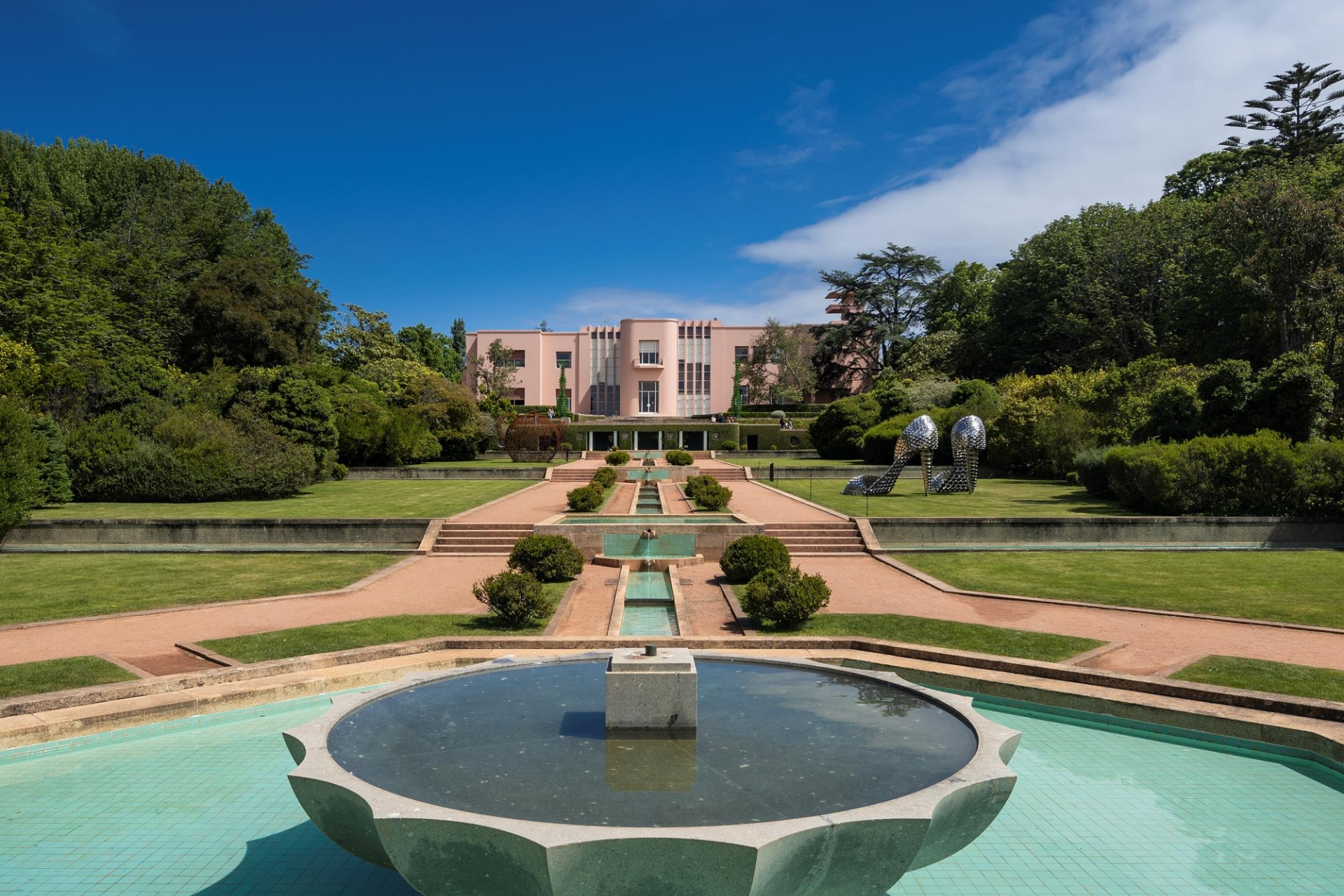
Serralves is experienced through relationships: contemporary art against vegetation, Álvaro Siza's architecture framing the landscape, the Art Deco Villa meeting the Park, and visitors discovering works by walking rather than following one compulsory sequence. GuideSofia's work uses those relationships as the basis for adaptive interpretation.
The partner context
The Serralves Foundation brings together the Museum of Contemporary Art, Serralves Villa, an 18-hectare Park, the Álvaro Siza Wing, and the Casa do Cinema Manoel de Oliveira. Its official mission connects contemporary art, architecture, landscape, the environment, cinema, and public learning.
The museum's fourteen galleries support changing exhibitions and multiple itineraries. Outside, sculptures from the Serralves Collection are integrated into the Park, where the artwork, vegetation, weather, architecture, and visitor's movement all influence the encounter.
The interpretation challenge
A conventional numbered tour can explain individual objects but struggle to express how Serralves works as a whole. Interpretation must move between temporary exhibitions, permanent outdoor works, architecture, the Villa, and landscape without making one route feel compulsory.
- Help visitors notice before asking them to look at a screen.
- Support different levels of prior knowledge about contemporary art.
- Explain architecture and landscape as part of the cultural experience.
- Keep content flexible as exhibitions and visitor context change.
- Offer international visitors natural multilingual access.
The GuideSofia approach
GuideSofia structures Serralves as a network of cultural encounters. Each place can have trusted source material, a clear interpretive purpose, optional depth, and several audience perspectives. The visitor can follow a curated route or discover relevant stories through location and interests.
- Map the cultural landscape: connect works, buildings, gardens, views, and transitions.
- Direct attention: begin with what is physically present before adding context.
- Adapt the narrative: vary theme, depth, language, and tone within approved editorial boundaries.
- Support outdoor discovery: use native-app location awareness and downloadable content where appropriate.
- Preserve continuity: let a work in the Park lead to architecture, the Villa, another sculpture, or a related museum experience.
One artwork, different visitors
GuideSofia developed an adaptive storytelling demonstration around Claes Oldenburg and Coosje van Bruggen's monumental garden trowel at Serralves. The same approved subject can open through engineering, art history, humor, landscape, scale, or a child-oriented perspective according to the visitor's interests and context.
The principle: personalization should not invent a different artwork. It should provide different, institutionally valid ways into the same artwork while keeping factual and curatorial boundaries intact.
Temporary exhibitions in days, not months
Serralves has a changing programme of temporary exhibitions, commissions, performances, and collection displays. A conventional audio-guide production cycle can struggle to keep pace when every exhibition requires separate scripting, translation, recording, technical assembly, and publication.
GuideSofia uses a connected production workflow designed to turn approved exhibition material into a new visitor guide in a matter of days. Curatorial texts, artwork records, catalogues, floor plans, and terminology form the controlled source layer. From there, the team can structure a route, write for listening, prepare audience perspectives, translate priority languages, generate and review audio, and publish through the existing GuideSofia app and web infrastructure.
- Ingest approved material: organize the exhibition's trusted sources and editorial rules.
- Design the guide: select stops, sequence, optional depth, and audience pathways.
- Produce languages and audio: accelerate translation and voice production while retaining human review.
- Review with the institution: centralize corrections, approvals, pronunciation, and sensitive wording.
- Publish and update: launch without building a new standalone app for every exhibition.
The operational advantage: temporary exhibitions can receive a complete digital interpretation layer within days, while the permanent GuideSofia foundation—visitor access, languages, analytics, and app distribution—remains in place.
Publicly visible work
GuideSofia's public catalogue includes a Serralves House and Gardens guide and a dedicated Sculptures in Serralves Park guide. The sculpture route currently presents fourteen published points connecting contemporary works to their landscape setting.
These outputs demonstrate content coverage and the interpretive model. They do not by themselves establish visitor adoption, satisfaction, or impact.
What success should measure
- discovery of works and spaces beyond the best-known locations;
- route starts, point-level listening, and continuation between Park and buildings;
- use of different themes, depths, and languages;
- visitor feedback on relevance and understanding;
- accessibility testing across indoor and outdoor conditions;
- staff and visitor research explaining behavioral signals.
Current evidence status: the adaptive interpretation concept and public GuideSofia routes are documented. This page does not claim measured changes in engagement, learning, visitation, or revenue. Any result should be added only with a defined period, source, and partner approval.
Evidence and sources
- Serralves Museum presentation - institutional mission and museum context.
- Serralves architectural project - galleries, architecture, and spatial organization.
- Serralves Park presentation - landscape and sculptures in the Park.
- GuideSofia: Sculptures in Serralves Park - public implementation output.
Explore GuideSofia for museums or discuss adaptive interpretation with our team.